20-10-2026
How to Build a Rental Property in Perambalur: A Practical Guide for Property Owners
By Kanagu Builders Team
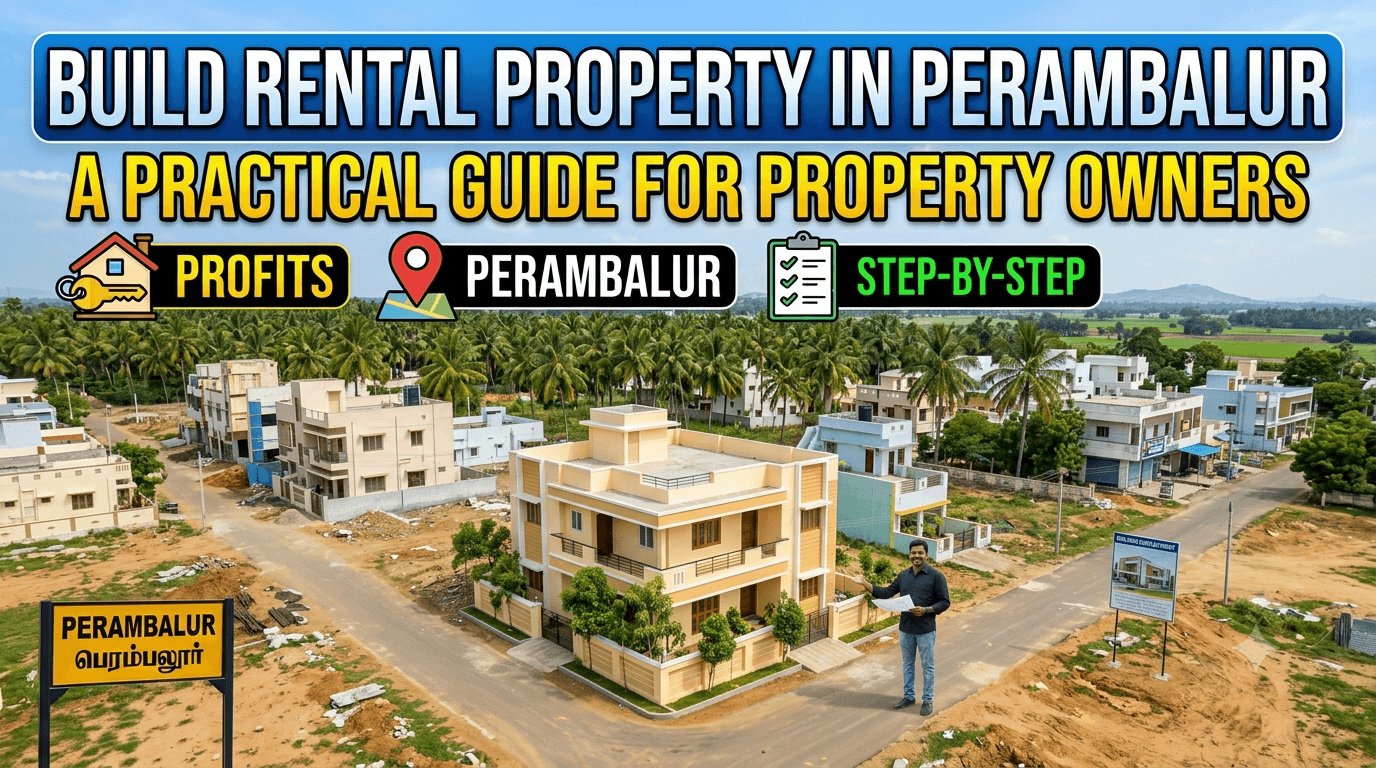
Owning a plot of land can be an opportunity to create a long-term income source. However, if you are planning to build a rental property in Perambalur, the success of your investment depends on more than just constructing a building. The property should meet tenant requirements, fit your budget, remain easy to maintain and suit the needs of the local market.
Whether you own a residential plot or a larger piece of land, careful planning can help you make better decisions before construction begins.
From choosing the right building type to planning the layout and managing construction costs, every decision can influence the property's long-term usability and financial performance.
In this guide, we explain how to plan a rental property in Perambalur and what to consider before starting construction.
1. Is Building a Rental Property in Perambalur a Good Option?
Building a rental property may be worth considering if you own land and want to generate recurring income from it. However, the investment should be evaluated carefully before construction starts.
The potential of a rental property depends on several factors, including:
- Location: Accessibility to workplaces, educational institutions, transport and everyday amenities may influence tenant interest.
- Target tenants: Families, working professionals, students and businesses have different space and facility requirements.
- Construction budget: Your total investment should account for construction, approvals, utility connections and other applicable expenses.
- Expected rental income: Research comparable properties in the same locality to estimate realistic rental income.
- Maintenance requirements: A practical design can help reduce recurring maintenance difficulties.
- Future flexibility: A building that can accommodate changing tenant needs may offer more options over time.
Before investing, compare the estimated rental income with the total project cost, ongoing expenses, vacancy periods and any loan repayments.
A well-planned rental property should be designed around realistic demand rather than assumptions about future rental returns.
2. Choose the Right Type of Rental Property
One of the first decisions is determining what type of building suits your plot, budget and investment objectives.
Independent Rental House
An independent house may be suitable for owners targeting families or tenants who prefer privacy and dedicated living spaces.
Consider separate access, adequate ventilation, practical parking arrangements and a layout that is easy to maintain.
Multiple Rental Units
If your plot size, applicable regulations and budget permit, you may consider constructing multiple residential units within one building.
This approach requires careful planning of staircases, entrances, shared areas, utility connections and privacy between units.
The number and size of units should be determined by the plot dimensions, permitted development and the requirements of potential tenants.
Apartment Building
An apartment building may be an option for owners planning a larger development.
However, it requires more detailed consideration of structural design, common areas, circulation, parking, water supply, drainage, fire safety where applicable, and building approvals.
Commercial or Mixed-Use Property
Depending on the location and permitted land use, a commercial building or a combination of commercial and residential spaces may be worth evaluating.
For example, some property owners may consider shops or offices at street level with residential units above, where regulations and market conditions support such a design.
The right property type is not necessarily the largest building you can construct. It is the one that best matches your investment capacity, local demand and long-term objectives.
3. Understand Your Target Tenants Before Finalising the Design
A rental property should be designed for the people who are most likely to occupy it.
Before finalising the building plan, research the types of tenants who may be interested in your locality.
For family tenants, useful considerations may include:
- Functional bedrooms and living spaces
- A practical kitchen and sufficient storage
- Bathroom privacy and convenient access
- Natural light and ventilation
- Secure entry and suitable parking
For working professionals or smaller households, compact and functional units may be more appropriate.
For commercial tenants, the requirements could include visible frontage, suitable access, usable floor space, electrical capacity and arrangements for deliveries or customer movement.
Speak with local property owners or rental agents and compare similar properties in the area. This can help you understand the layouts, facilities and rental ranges that prospective tenants may prefer.
Planning around actual tenant requirements can help you avoid spending money on features that do not add meaningful value to your intended rental market.
4. Plan the Building Layout for Comfort and Practicality
The layout of a rental building affects everyday comfort, privacy and maintenance.
During the planning stage, pay attention to the following elements.
Separate access: Where multiple units are planned, consider how tenants can enter and leave without unnecessary disturbance to other occupants.
Ventilation and natural lighting: Place windows and openings thoughtfully to support comfortable indoor spaces, subject to the design and site conditions.
Water and drainage: Plan water storage, plumbing, drainage and wastewater arrangements according to the building's expected occupancy and applicable requirements.
Electrical planning: Provide suitable electrical points and infrastructure for the intended use of each unit.
Parking and circulation: Evaluate parking needs, pedestrian movement and access to the property before finalising the layout.
Privacy: Position doors, windows, balconies and shared spaces to minimise unnecessary overlooking between units.
Maintenance access: Ensure that plumbing, electrical systems and common facilities can be inspected and maintained conveniently.
These decisions are easier to address during the design stage than after construction is complete.
Working with a qualified building professional can help you coordinate the layout, structural requirements and building services before work begins.
5. Estimate Your Rental Property Construction Budget
Understanding the total investment required is an essential step in rental property construction.
The final cost depends on factors such as plot conditions, built-up area, number of floors, structural design, material specifications, finishing choices and the complexity of the project.
Rather than focusing only on a quoted construction rate per square foot, prepare a project budget that considers the broader expenses.
Your budget may include:
- Architectural drawings and engineering services
- Structural design and related professional fees
- Applicable approvals and statutory charges
- Foundation and structural construction
- Brickwork, plastering and waterproofing
- Flooring, doors, windows and painting
- Electrical and plumbing installations
- Water storage, drainage and utility connections
- Parking, compound walls and external works, where required
- Contingency funds for unforeseen expenses
Ask your builder for a written estimate that clearly identifies the work included, material specifications, exclusions and payment milestones.
For example, check whether flooring, sanitary fittings, electrical fixtures, painting and external works are included in the quoted amount.
Comparing quotations on the basis of the same specifications will give you a more meaningful picture of the actual investment required.
It is also sensible to maintain a contingency reserve rather than allocating your entire budget to the initial construction estimate.
6. Prioritise Construction Quality Over Short-Term Savings
When building a rental property, reducing costs without understanding the consequences can create expensive problems later.
Structural work, waterproofing, plumbing, drainage and electrical installations deserve particular attention because defects can affect safety, usability and maintenance costs.
Before construction begins, discuss the following with your builder:
- Structural design prepared by an appropriately qualified professional
- Material specifications and quality checks
- Foundation requirements based on site conditions and engineering recommendations
- Waterproofing for relevant wet areas and exposed surfaces
- Proper installation and testing of plumbing and electrical systems
- Inspection procedures at important stages of construction
- A clear process for addressing defects and incomplete work
Finishing materials can be selected according to your budget and the intended rental segment. Durable, easy-to-clean flooring and practical fittings may be preferable to expensive finishes that do not justify their cost.
The goal is to balance the initial investment with durability, tenant comfort and long-term maintenance.
7. Check Approvals and Documents Before Construction
Before starting a rental building project in Perambalur, verify the applicable planning, building and land-use requirements.
The exact approvals and documents required can vary depending on the property location, plot classification, building size, number of floors and intended use.
Important items to review may include:
- Land ownership documents and relevant property records
- Applicable land-use and development restrictions
- Required building plan approval and permissions
- Setback, access and parking requirements
- Applicable structural and safety requirements
- Utility connection requirements
- Additional permissions that may apply to commercial or larger multi-unit developments
Consult the relevant local planning authority, municipality or other competent authority, as applicable, before commencing construction.
Do not assume that a design permitted on one plot will automatically be approved on another.
Resolving these matters early can help reduce the risk of avoidable delays, redesigns and additional expenses.
8. Plan for Long-Term Maintenance and Rental Appeal
Construction does not end when the building is handed over. A rental property also needs ongoing care to remain functional and attractive to prospective tenants.
Consider maintenance during the design stage itself.
Choose materials and fittings that are appropriate for the intended use and can be repaired or replaced without excessive difficulty.
Provide practical access to plumbing lines, drainage points and other building services. Ensure that terraces and other exposed areas receive appropriate waterproofing and drainage treatment.
Plan common spaces so they are easy to clean and maintain. Where several tenants share a building, establish clear arrangements for shared utilities, common-area maintenance and access.
You should also consider how easily the building could accommodate future changes in tenant requirements.
A property with a functional layout, reliable utilities and manageable maintenance needs may be better positioned to retain tenant interest over time.
9. Why Choose the Right Construction Partner?
Choosing a construction partner is an important decision because the builder's planning, coordination and workmanship can influence the overall project experience.
For a rental property, you need more than a building that looks complete. You need a structure that meets the intended use, follows the approved plans and is built with appropriate attention to quality.
When evaluating a builder, consider:
- Relevant experience in residential or commercial construction
- Clear estimates and material specifications
- Coordination between design, engineering and site execution
- Communication about progress, changes and delays
- Defined payment terms and project milestones
- Documentation and handover procedures
- Genuine examples of previous work, where available
Discuss your intended rental property, plot details, approximate budget and preferred timeline before finalising the project.
A detailed discussion at the beginning can help establish realistic expectations and identify important decisions before construction starts.
Planning to Build a Rental Property in Perambalur?
If you own land in Perambalur and are considering developing it into a rental house, multiple residential units or a commercial property, the first step is to prepare a practical construction plan.
Kanagu Builders can be approached to discuss your construction requirements and explore a suitable project approach based on your site, building type and budget.
Whether you are planning a new residential building or a commercial construction project, a clear understanding of the design, specifications, scope of work and estimated investment can help you move forward with greater confidence.
Have a plot in Perambalur and planning to build a rental property? Contact Kanagu Builders to discuss your project requirements and take the next step towards planning your building.
Frequently asked questions
Building a rental property may be a suitable long-term investment if the location, tenant demand, construction cost and expected rental income align with your financial goals. Research comparable rental properties and calculate potential income after accounting for maintenance, vacancies, taxes and financing costs before proceeding.
The suitable property type depends on your plot size, budget, location and intended tenants. Options may include an independent rental house, multiple residential units, an apartment building or a commercial property. Research local demand and confirm the applicable development requirements before finalising your design.
Evaluate the target tenants, plot suitability, building layout, construction budget, parking, ventilation, utility requirements, maintenance needs and applicable approvals. A well-defined plan can help you make informed decisions before construction begins.
Still have questions? Contact us.